120,00€
1 in stock
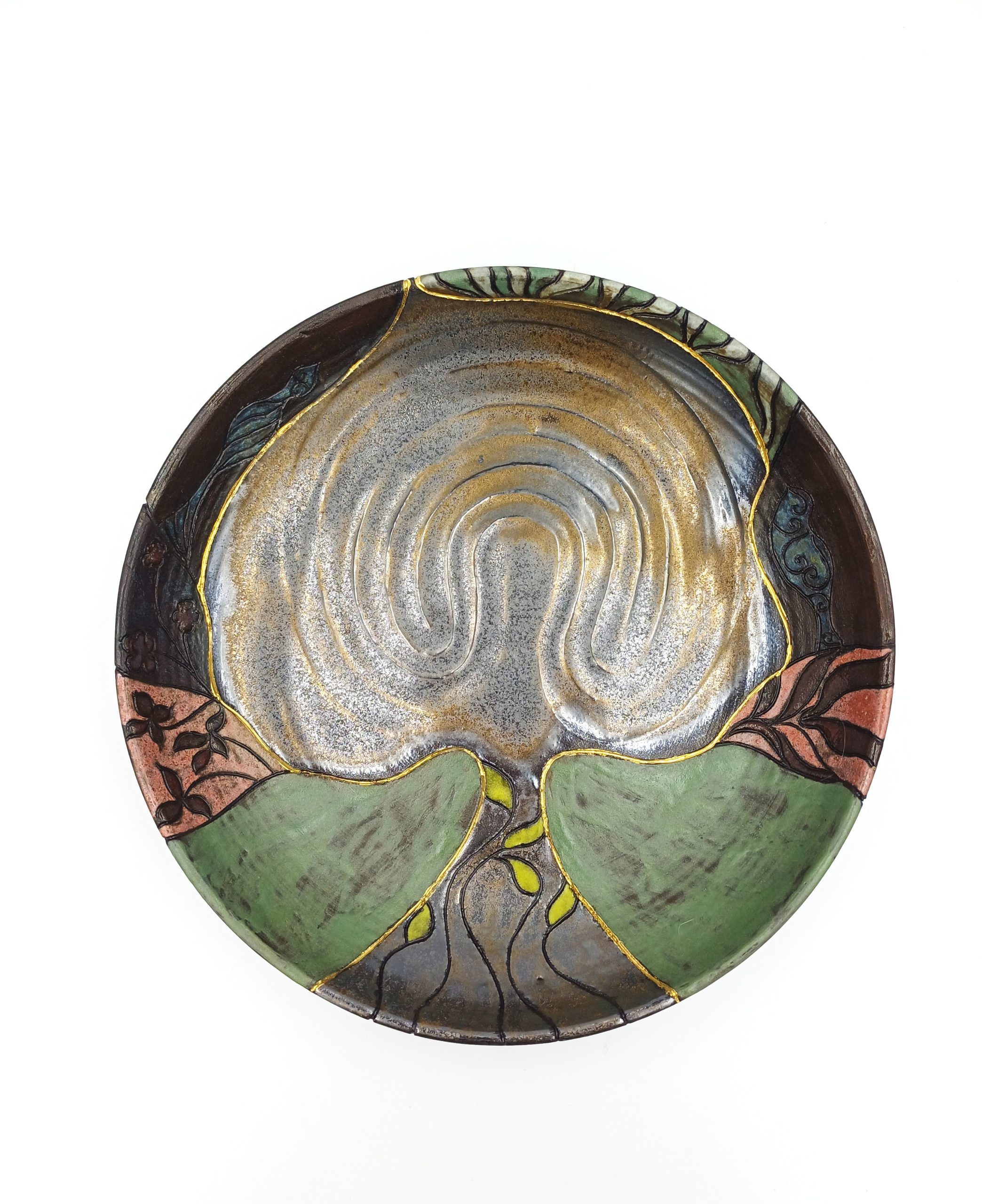
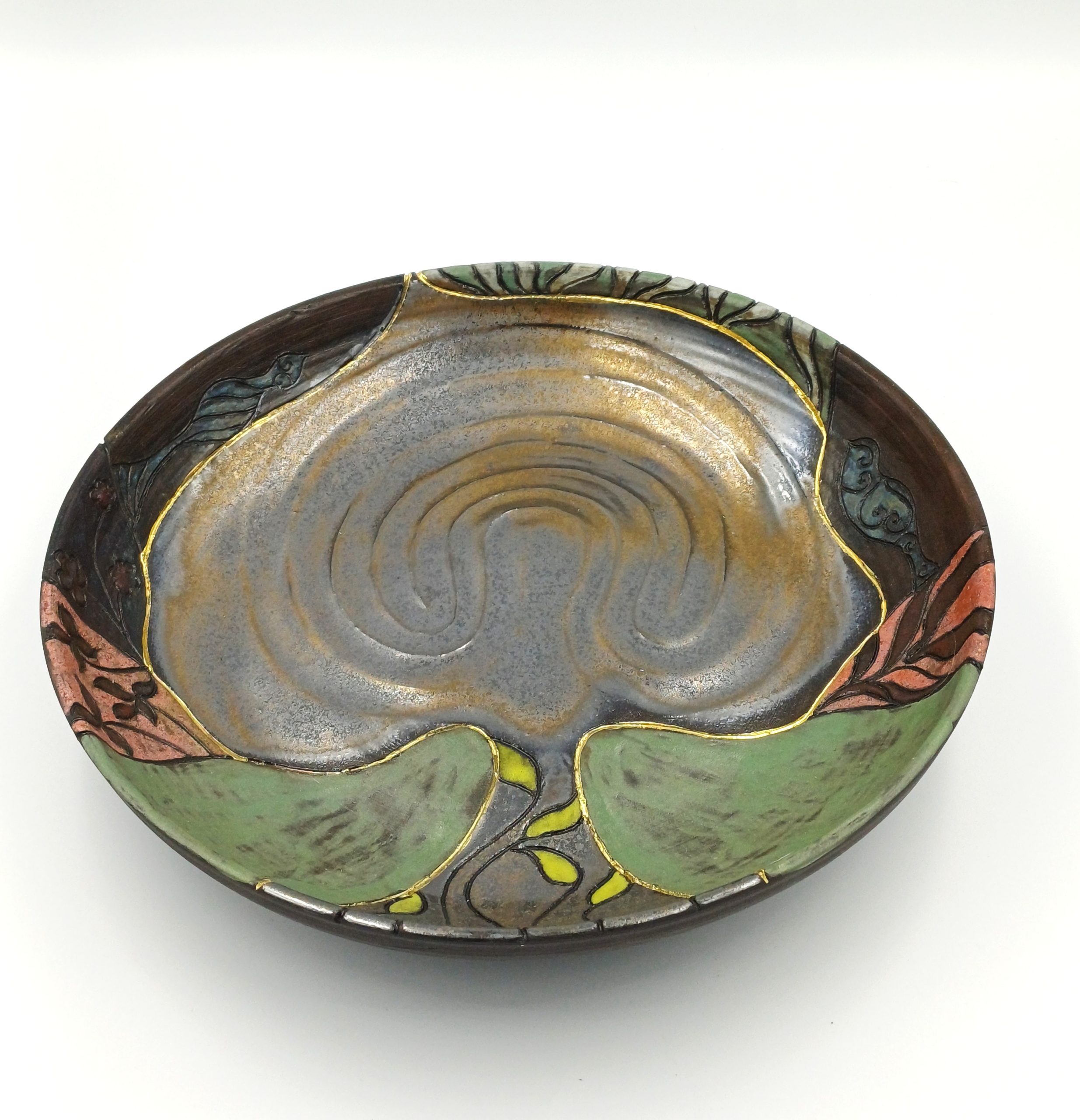
Rahu’s Labyrinth on a Plate is part of a series of labyrinths engraved on ceramic plates. The ceramic pieces by Pottery Art—designed by Polona Zajc—also feature depictions of labyrinths of all kinds. This particular labyrinth is Rahu’s Labyrinth, also known as the Labyrinth of Transformation. The plate is handcrafted on a potter’s wheel from black clay. The symbol of the Labyrinth of Transformation is carved into it. It was fired at a temperature of 1210°C. The clay plate features various carved patterns painted with colored glazes, while the labyrinth is glazed with a matte bronze glaze. The details are accented with real gold. The plate has a diameter of 31 cm. The labyrinth design gives the piece special significance, both for the person wearing it and for the environment in which it is placed.
Polona Zajc’s pottery art collection features clay plates. Each clay plate represents its own labyrinth design. These are sources of power that are very much active. Having power does not mean having access to a large amount of energy, but also having access to a great deal of intelligence. And this is how labyrinths work. They are usually built on the ground so that one can walk along their paths. On these pages, however, you’ll find labyrinths depicted in ceramics. We can also “walk” through these as we follow their paths, drawn or carved into the clay.
The Labyrinth of Transformation, or Rahu’s Labyrinth, is one of two slightly different from the others and possess certain new characteristics and peculiarities. The paths of this labyrinth end without a center. Essentially, we simply pass through it, coming from one direction or the other. And so, with these two labyrinths, we speak of receptive or expressive movement rather than form. It has no element; its color is brown or black; its direction is southwest; and its natural movement is receptive. The fundamental purpose of the Labyrinth of Transformation is the realization that the only constant in this world is change. Since Rahu’s labyrinth has no center—as we simply pass through its form from one side to the other—it signifies the absence of a goal. There is neither purpose nor goal; there is only the fact that we are constantly changing. It stimulates all kinds of change within us, and the time to use it comes during difficult life situations, when life turns upside down.
| Weight | 1 kg |
|---|
| Piškotek | Trajanje | Opis |
|---|---|---|
| cookielawinfo-checkbox-analytics | 11 months | This cookie is set by GDPR Cookie Consent plugin. The cookie is used to store the user consent for the cookies in the category "Analytics". |
| cookielawinfo-checkbox-functional | 11 months | The cookie is set by GDPR cookie consent to record the user consent for the cookies in the category "Functional". |
| cookielawinfo-checkbox-necessary | 11 months | This cookie is set by GDPR Cookie Consent plugin. The cookies is used to store the user consent for the cookies in the category "Necessary". |
| cookielawinfo-checkbox-others | 11 months | This cookie is set by GDPR Cookie Consent plugin. The cookie is used to store the user consent for the cookies in the category "Other. |
| cookielawinfo-checkbox-performance | 11 months | This cookie is set by GDPR Cookie Consent plugin. The cookie is used to store the user consent for the cookies in the category "Performance". |
| viewed_cookie_policy | 11 months | The cookie is set by the GDPR Cookie Consent plugin and is used to store whether or not user has consented to the use of cookies. It does not store any personal data. |


Reviews
There are no reviews yet.